Saturday, March 10, 2018

parent visits

A Birthday Celebration

On the Monday following break, Anne helped to celebrate Tully turning 6 with a collection of beautiful stories and a colorful birthday poster! The poster now hangs in our classroom and has been a favorite gathering place for the children. They are curious about the "magic" in one of the photographs. Some continue to explain the bright lights in the photograph are a reflection of the sun, while others firmly believe the bright lights are a kind of magic.


Spanish Class

On Friday we had our first Spanish Class with Kristen. Kristen invited the children to be part of a greeting and had them practice following directions in Spanish - the following of movement directions provided a connection to our writing workshop! Some of the children have been part of Spanish Class with Kristen in the past and were eager to help model songs and activities. Kristen read an engaging book and sang a good bye song at the end - all of the children are looking forward to next week's class!


Hola! Me Llamo ___________ .


how to draw pete the cat

Throughout the week we referenced the text Pete the Cat and His Four Groovy Buttons during reading workshop, math workshop, and our morning meeting. We used the pattern in the text to strengthen our reading of patterned books - especially when the pattern breaks! We used the text as an interactive read aloud when learning about writing number sentences for subtraction (take away) problems. Using real buttons as manipulatives, the children solved a subtraction problem in their math journals, figuring out how many buttons were left on a friend's shirt.

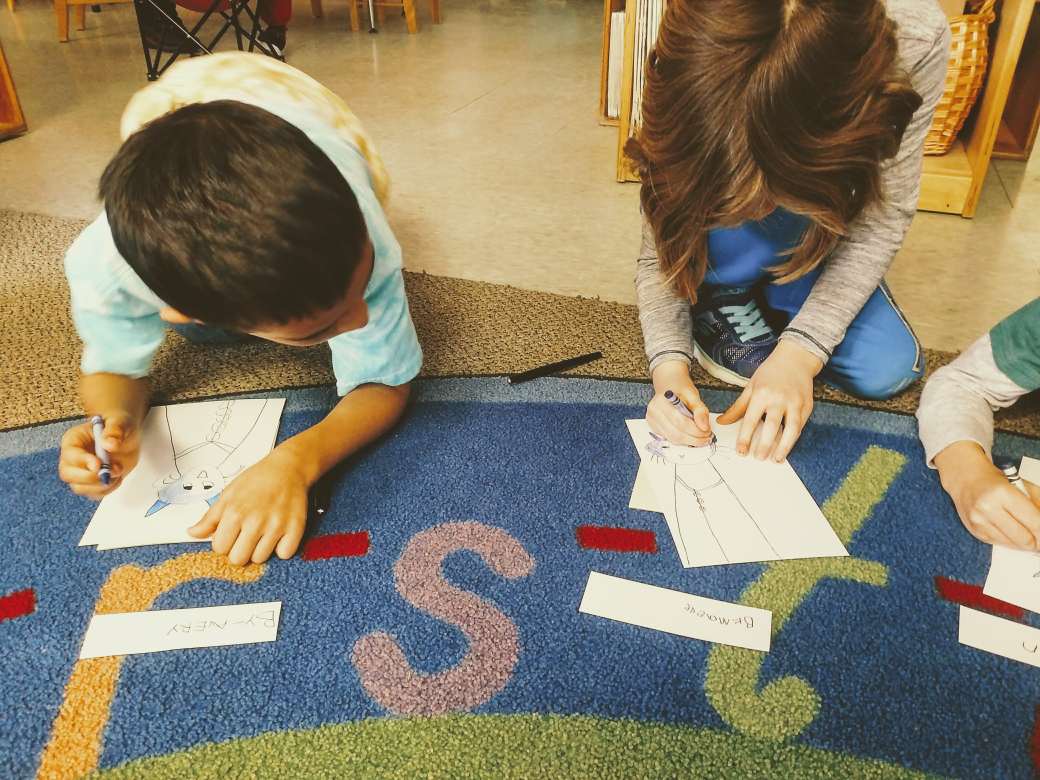
On Thursday we reread the loved book and I shared my numbered steps of How To Draw Pete the Cat. The children gathered on the edge of the oval rug and followed the steps. We talked about how following how to directions makes you a stronger how to writer. I used shapes in my drawing, offering continued reinforcement of math vocabulary and knowledge of two dimensional shapes. 

As part of our conversations, we discussed how this one book connected all of our learning!

During a museum walk share, AM exclaimed, "I noticed everyone gave this a try and all of the drawings look Pete-ish!"

The last step was for the children to put buttons on their Pete's shirt. On Monday, I will invite the artists and mathematicians to write a number sentence to match the number of buttons left on their Pete. 

Look for updates to this post later in the week!


informational writing

The Kindergarteners came back from February break with a continued eagerness and joy to learn. Following the telling, planning, and writing of true stories in January and February, I introduced the writing of how to books. The structure of how to writing often feels more developmentally appropriate for five and six year old authors.

Children spend most of each day hearing and following directions, but through their how to books they have the opportunity to give directions using pictures and words - there is power in writing a how to book!

First we listed what we already know about informational writing;

- the author writes about one thing they know a lot about
- there is lots of detail (pictures, labels, action marks)
- there is an ending!

Then I introduced the new kind of informational writing they would be doing - how to, or giving directions. The young writers excitedly explored a collection of how to examples, noticing important text features.


How to books have;

- directions
- numbered steps
- a picture with each step!


With ongoing exposure to various how to books and conversations about informational writing, the children worked together to plan and write a class how to book.

DM suggested we write a How To Be Kind book, because we all know a lot about kindness. IM offered that we should write a How To Make a Community book, because we all did that and we are experts in it. TJ thought we should write a How To Write Numbers book, because we do that every day.

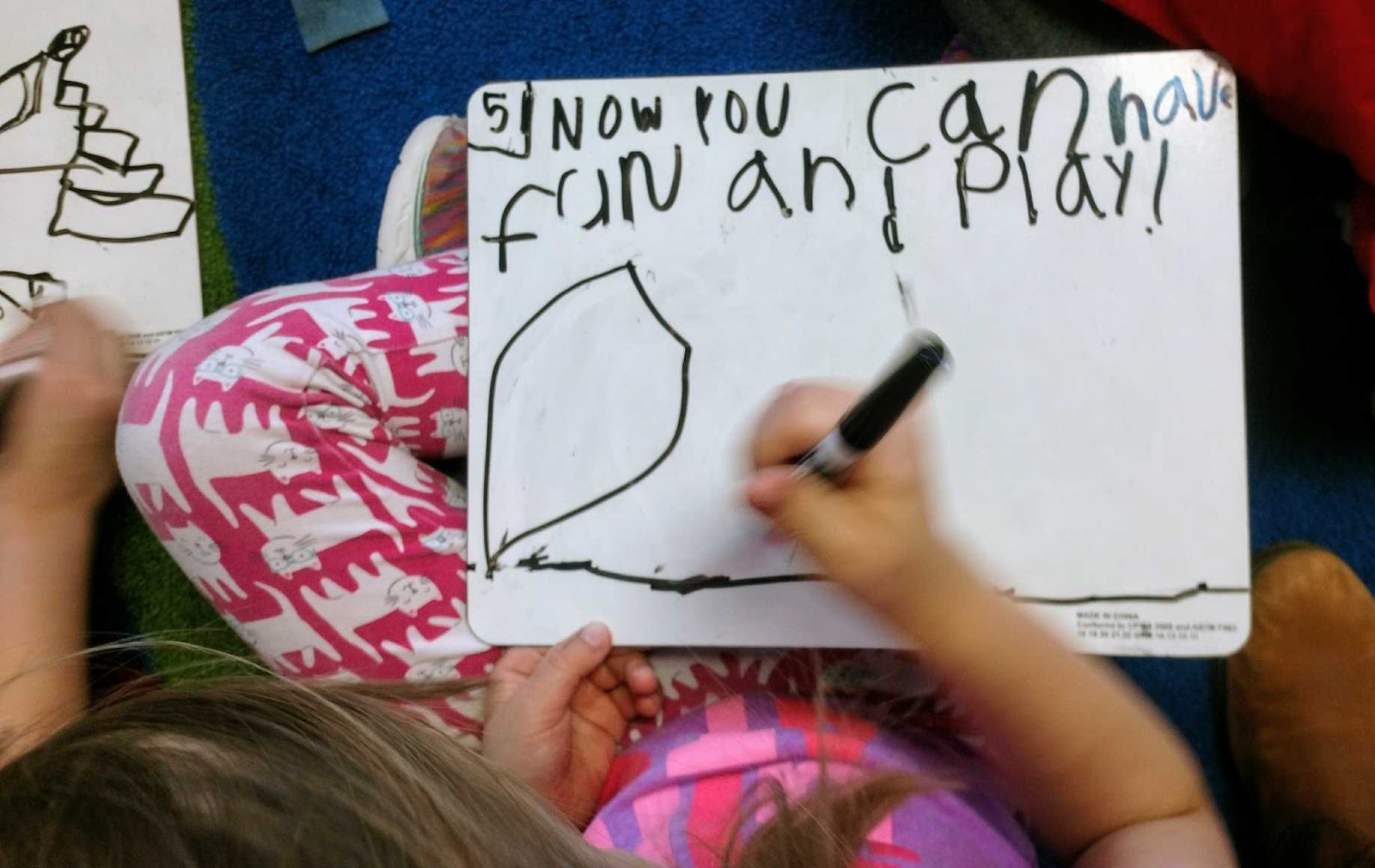
A vote was essential. It was close, but How To Make a Community had the most votes, with How To Write Numbers coming in second! We planned the piece together on large chart paper and the children used white boards to record their numbered steps. Throughout their work we embraced sharing opportunities, noticing how you can show a direction in many different ways!


How To Make a Community

By - The Kindergarten

(a photo documentation of their work)


1. First you need children.


2. You need to be kind.


3. Then you can make friends.


4. You need to take care of yourself and then you have a community!


5. Now you can have fun and play together!